Top Heavy Machinery Tempered Glass Weight Capacity?

Time:2026-09-20 Author:Oliver
0%

How much weight can a tempered glass panel for heavy machinery hold? The answer depends on more than glass thickness. A panel used in an excavator cab faces vibration, sudden impacts, temperature changes, and uneven pressure. A 6 mm panel may perform differently from another 6 mm panel with larger dimensions or weaker edge support. Size matters greatly.

In practical equipment evaluations, engineers examine the glass type, surface area, mounting frame, gasket condition, and load direction. A small, fully supported window can resist considerable distributed pressure. A large panel with unsupported edges may fail under a much smaller force. The word “weight” can also create confusion. Static pressure from a sandbag is not the same as a falling tool or a twisting machine frame. Tempered glass usually breaks into smaller pieces, but it does not remain intact after failure.

Reliable capacity data should come from the machinery manufacturer, glass supplier, or a qualified testing laboratory. Ask for the panel thickness, tempering standard, test method, and allowable safety margin. Do not estimate capacity from appearance alone. Field checks may reveal scratches, chips, loose seals, or frame distortion. These details can reduce real-world performance.

A simple number would be convenient. It may also be wrong. This guide compares common panel designs, support conditions, and testing practices. It explains why a rated capacity must match the actual machine, installation, and operating environment. When uncertainty remains, professional assessment is the safer decision.
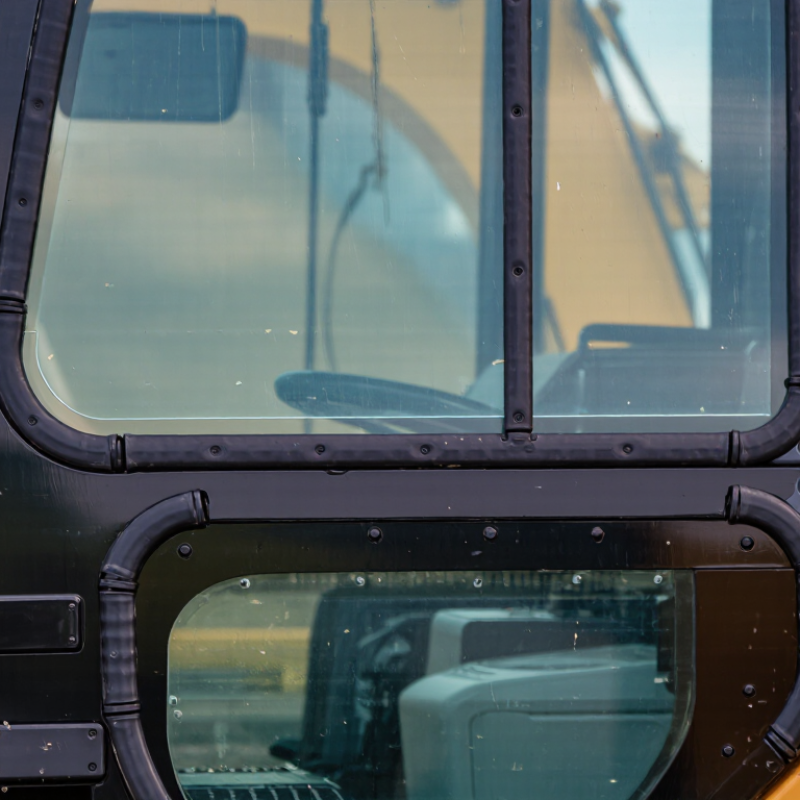
Top Heavy Machinery Tempered Glass Weight Capacity?

What Is Tempered Glass in Heavy Machinery?

What Is Tempered Glass in Heavy Machinery?

Tempered glass is safety glass treated with controlled heating and rapid cooling. This process creates surface compression and improves impact resistance. In heavy machinery, it protects operators from wind, dust, flying stones, and accidental contact. It is not bulletproof glass. When it fails, it usually breaks into small, blunt-edged granules. ASTM C1048 and EN 12150 describe these heat-treatment and fragmentation requirements.

The National Glass Association’s technical guidance reports that tempered glass can provide roughly four times the bending strength of ordinary annealed glass. However, it has no universal “weight capacity.” Capacity depends on thickness, panel size, support spacing, mounting pressure, and machine vibration. Glass density remains close to 2,500 kilograms per cubic metre. An 8-millimetre panel weighs about 20 kilograms per square metre. A larger pane may weigh more, but that does not mean it can safely carry a heavier load. This distinction is often missed.

Tips: Check the glazing standard, thickness, edge condition, and frame design together. Keep fasteners from pressing directly against the glass. Inspect for chips, scratches, and loose seals during maintenance. One field lesson is easy to overlook: stronger glass can still fail at a damaged edge. Replacing only the cracked pane may also miss a frame problem.

Top Heavy Machinery Tempered Glass Weight Capacity

Tempered glass is heat-treated safety glass used in machinery windows, doors, guards, and operator cabins. Its approximate mass is calculated from a glass density of about 2,500 kg/m³. Actual load capacity depends on thickness, panel size, edge support, mounting method, impact requirements, and applicable safety standards.

Important: The values below represent approximate glass self-weight per square metre, not a certified maximum payload or impact rating. Engineering verification is required before using tempered glass in heavy machinery.

How Is Tempered Glass Weight Capacity Determined?

Top Heavy Machinery Tempered Glass Weight Capacity?

How Is Tempered Glass Weight Capacity Determined?

Tempered glass capacity is not determined by thickness alone. Engineers examine the pane’s width, height, shape, edge finish, and support points. A 10 mm panel may carry a different load when mounted vertically than when used as a horizontal cover. The frame matters greatly.

For heavy machinery, designers assess several forces. These include the glass’s own weight, vibration, pressure changes, impact from loose objects, and repeated movement. They also consider how the load spreads across the surface. A small steel bracket can create dangerous pressure at one corner. A continuous gasket usually distributes force more evenly.

Testing helps confirm the calculation. Technicians may inspect the glass for edge damage, measure the frame opening, and test samples under controlled pressure. Safety factors are added because real machines rarely operate perfectly. Dust, temperature changes, uneven tightening, and aging seals can reduce performance. Keep the surface clean.

There is no universal weight rating for every tempered glass panel. The final capacity depends on the complete assembly, not glass alone. A qualified glass engineer should review the drawing, mounting method, and expected operating conditions. One calculation can still miss a weak edge or a loose fastener. That is why practical inspection deserves equal attention.

Which Factors Affect Tempered Glass Load Performance?

Top Heavy Machinery Tempered Glass Weight Capacity?

Tempered glass has no universal weight capacity. Its performance depends on thickness, panel size, support spacing, and load direction. A 6 mm panel may handle a modest, evenly distributed load, yet fail under a small concentrated force. Load paths matter more than thickness alone. Glass supported on four edges behaves differently from glass fixed at two points. The frame must also remain rigid during machine movement.

Vibration is a serious factor in heavy machinery environments. Repeated shocks can stress corners, drilled holes, and poorly fitted gaskets. Edge damage is especially dangerous because tempered glass carries much of its stress near the surface. Heat from engines, cold outdoor air, and uneven temperatures can create thermal gradients. Dirt trapped between the glass and frame may create pressure points. It seems minor, but it is not.

Engineers normally evaluate panel dimensions, glass type, mounting details, impact energy, and expected service loads together. Laminated glass may provide better retention after breakage, but it does not automatically increase load capacity. Testing should reflect real conditions, including vibration and temperature changes. A workshop calculation can miss installation defects. That is where many estimates become unreliable. Use certified calculations for operator guards, inspection windows, and overhead panels, especially when people work beneath them. A practical review should inspect chips, scratches, loose fasteners, and frame distortion before approving continued use.

How Much Weight Can Heavy Machinery Glass Support?

How Much Weight Can Heavy Machinery Glass Support?

Heavy machinery glass does not have one universal weight capacity. Its safe load depends on thickness, panel size, shape, edge quality, mounting method, and load direction. A small, well-supported window can resist more pressure than a larger panel with the same thickness. Tempered glass is strong under distributed pressure, but it is not designed to act like a platform or shelf.

Tempered glass is strong under distributed pressure, but it is not designed to act like a platform or shelf.

The real concern is often dynamic loading. A tool, metal part, or operator’s body can create a sharp impact far greater than its resting weight.

For example, a 20-kilogram object dropped onto one corner may stress the glass more severely than a 100-kilogram load spread across the frame.

Support matters. Four properly aligned edges usually perform better than loose or uneven contact. Rubber seals should remain flexible, clean, and undamaged.

In field inspections, cracks often begin near drilled holes, corners, or damaged edges. Small flaws matter.

Manufacturers and engineers normally calculate pressure, vibration, temperature changes, and emergency impact together.

They may also specify laminated safety glass, which helps retain fragments after breakage.

A generic “maximum weight” number can be misleading without the panel drawing and mounting details.

I would never test machinery glass with a person or loose heavy object. Even careful estimates can fail when vibration, frame distortion, and repeated impacts are ignored.

How to Select and Maintain Tempered Glass Safely?

Tempered glass in heavy machinery is not chosen by weight capacity alone. Panel size, thickness, edge support, mounting pressure, and operating vibration all affect performance. A larger window may need thicker glass or a laminated safety construction. Confirm the equipment’s technical specification before ordering replacement glass. A qualified glazing engineer should verify the design when dimensions or mounting details change.

Inspect the glass before every demanding shift. Look for chips, star-shaped cracks, cloudy areas, loose seals, and metal contact along the edges. Even a small edge defect can weaken tempered glass. Keep the surface clean with mild soap and water. Avoid abrasive pads, sharp tools, and sudden cold water on a hot panel. Check rubber channels and fasteners too. Excessive tightening can create hidden stress.

Do not drill, cut, or grind tempered glass after manufacture. It may break suddenly. Replace damaged panels with the correct size, thickness, treatment, and mounting system. Temporary fixes deserve caution. They can hide a growing failure. One practical lesson is easy to miss: a glass panel may look perfect while its seal has already failed. Record inspection dates and unusual impacts. When uncertain, stop using the machine and request a competent assessment. A perfect checklist still cannot replace careful judgment.

FAQS

Is tempered glass weight capacity determined by thickness alone?

No. Panel size, shape, edge finish, frame design, and support points also affect capacity. The frame matters.

Why can the same glass thickness support different loads?

A vertical panel and a horizontal cover experience different forces. A small bracket can concentrate pressure at one corner.

What forces affect glass used in heavy machinery?

Engineers consider vibration, pressure changes, impacts, repeated movement, and the glass’s own weight. Operating conditions matter.

How does the mounting system influence safety?

Continuous gaskets usually spread force more evenly. Uneven tightening, loose fasteners, or metal contact can create hidden stress.

How is tempered glass capacity checked?

Technicians inspect edges, measure the frame opening, and test samples under controlled pressure. Safety factors allow for imperfect conditions.

What should be checked before a demanding work shift?

Look for chips, star-shaped cracks, cloudy areas, loose seals, and edge contact. Small edge damage can reduce strength.

How should tempered glass be cleaned and maintained?

Use mild soap and water. Avoid abrasive pads, sharp tools, and cold water on hot glass. Check seals and fasteners.

Can tempered glass be drilled, cut, or ground after manufacture?

No. These actions may cause sudden breakage. Replace damaged glass with the correct size, thickness, treatment, and mounting system.

What should happen when the glass or mounting system seems uncertain?

Stop using the machine and request a competent assessment. A calculation may miss a weak edge. A perfect checklist is not enough.

Conclusion

Tempered glass used in heavy machinery is heat-treated to improve strength, thermal resistance, and safety compared with ordinary glass. Its weight capacity is not determined by thickness alone; engineers also consider panel dimensions, support spacing, mounting method, glass quality, and the direction and distribution of the applied load. So, the question “How much weight can a tempered glass panel for heavy machinery hold?” cannot be answered with one universal figure. A properly supported, smaller panel may withstand considerable pressure, while a large or poorly mounted panel can fail under much less force.

Performance is also affected by vibration, impact, temperature changes, edge damage, and repeated mechanical stress. For safe selection, operators should use glass designed for the equipment’s working environment, confirm its specifications with a qualified professional, and avoid placing heavy objects directly on the panel. Regular inspections should check for chips, scratches, cracks, loose seals, and mounting movement. Damaged glass should be replaced promptly, and cleaning should use non-abrasive materials to preserve visibility and structural reliability.

Oliver

Oliver

Oliver is a seasoned marketing professional with a wealth of expertise in driving brand awareness and engagement. With a deep understanding of our company's product offerings, he consistently delivers high-quality content that enriches our professional blog. His insights not only shed light on......